
The National Youth Council of Malawi (NYCOM) is seeking stronger cooperation among government institutions to address challenges facing young people who are not in employment, education or training (NEET), a group estimated to account for 43.3 percent of the youth population.
The council says coordinated efforts across government ministries, departments and agencies are critical to equipping the affected young people with practical skills, financial support and opportunities to participate in the country’s economic development.
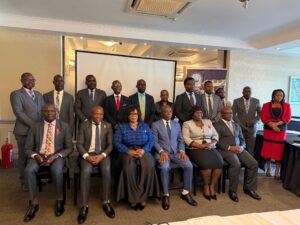
NYCOM Chief Executive Officer Rhoda Gadama Misomali made the call during a programme collaboration inception meeting held in Lilongwe which brought together the Secretary for Youth, Sports and Culture, Jameson Ndalama, and representatives of various government institutions.
Misomali observed that despite young people constituting a significant proportion of Malawi’s population, many remain excluded from opportunities that could enable them to become economically productive.
She said the situation was particularly worrying among NEET youth, many of whom depend on informal casual labour, commonly known as ganyu, or remain idle, exposing them to substance misuse, anti-social behaviour and economic exclusion.
Misomali noted that although the country has introduced various youth policies and programmes, there is still a gap in interventions specifically designed to address the needs of NEET youth.
“Closing the gap between youth potential and opportunity cannot be left to one institution. It takes government working as one, together with partners, communities and young people themselves,” she said.
Under the proposed collaboration, the targeted young people are expected to access technical and vocational training in fields such as agriculture, information and communication technology, construction, renewable energy and tailoring.
The initiative will also incorporate entrepreneurship training, mentorship and product certification, alongside efforts to connect beneficiaries to youth-friendly financing, tools and equipment to support their businesses.
Sports and creative arts institutions are also expected to contribute by identifying and developing talent into viable sources of income.
The programme will prioritise rural and peri-urban youth, school dropouts, street-connected children and young people, those in conflict with the law, out-of-school teenage parents and individuals working in the waste management sector.
Women and persons with disabilities will also receive special consideration to ensure inclusive access to the opportunities.
In his remarks, Ndalama reaffirmed government’s commitment to making youth development and economic empowerment a collective responsibility.
The initiative is expected to contribute to reducing youth unemployment and promoting self-reliance, in line with the Malawi 2063 development agenda and the National Youth Policy 2023–2028.
Participants at the meeting also explored ways of improving coordination among government institutions and partners to ensure that interventions addressing youth challenges are more effective and responsive to the needs of young people.