



Malawi continues to face one of the world’s highest cervical cancer burdens, yet a significant gap remains in its prevention efforts: men are still missing from the conversation.
Human Papilloma Virus (HPV), the virus responsible for cervical cancer, is transmitted sexually, and both men and women can carry it.
According to the World Health Organization (WHO), almost all sexually active people will contract HPV at some point, often without showing symptoms.
The Ministry of Health, through its National Cervical Cancer Strategic Plan, reports that the country registers over 4,000 new cervical cancer cases annually.
Studies from sub-Saharan Africa consistently show that men often have little or no knowledge about HPV, vaccination, or screening because campaigns target only girls or women.
The Center for Disease Control and Prevention In sub-Saharan Africa states that less than 15% of men understand their role in HPV transmission in the region.
Furthermore, World Health Organization (WHO)’s global HPV awareness assessments shows that only 30% of men worldwide have heard of HPV.
In Malawi, the situation seems to be similar.
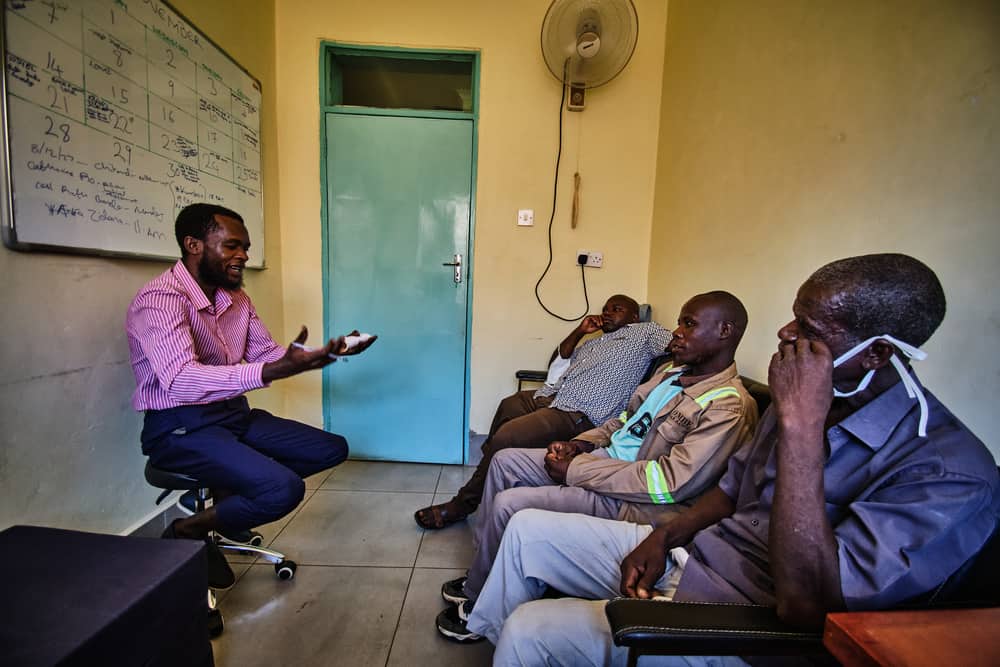
In Bangwe township, 34-year-old Cornilius Mwalure said he has heard of HPV but has never been involved in any public education.
“I’ve heard about HPV that is a human papillomavirus, to be the virus which is the causative agent or the causative virus that causes cervical cancer. However, I’ve never been involved in an awareness or counseling sessions to do with this topic of the cervical cancer,” he said.
He added that, “it’s my plea and my wish that someday we men, we shall be involved in such awareness so that we become rather become part and parcel of the preventive and the supportive efforts.”
His concerns reflect a broader issue: most cervical cancer initiatives still target women alone.
Ministry of Health spokesperson Adrian Chikumbe explained how HPV spreads and why both men and women matter in prevention.
“The virus that causes this cervical cancer can be transmitted normally through sexual contact with a person that has the virus. It could be a male getting it from a female, and maybe sometimes a female getting it from a male. What it means is that the virus can be harbored by both. It’s just that in males, normally it doesn’t cause any illness.”
He added that, despite limited resources, the country is doing what it can and encouraged men to use other available prevention methods.
“We are still encouraging for men to go for male medical circumcision. This is very, very effective, not only to prevent the human papilloma virus, but several other diseases can that be spread through sexual contact.”
At the Malawi National Cancer Centre, oncologist Dr. Ruth Nyirenda echoed the need for male involvement in prevention.
She explained that HPV is sexually transmitted and requires cooperation from both genders.
She said men have a responsibility to make sure their mothers, spouses, sisters go for screening and support the women throughout the treatment if diagnosed with cervical cancer.
“We all need to be committed to one partner. Men should ensure their daughters are vaccinated when they reach the eligible age group.”
Despite progress in vaccination campaigns targeting girls aged 9 to14, women still carry most of the burden of screening, prevention and stigma.
According to advocates, silence and late presentation remain major challenges.
The Executive Director of Cancer Survivors Quest Chikhulupiliro Ng’ombe, says Malawi cannot eliminate cervical cancer without mainstreaming gender in all health interventions.
Ng’ombe emphasized that although cervical cancer mainly affects women, men are central in decision-making within households meaning their absence has real consequences.
“For cervical cancer, it is not different. We need to be able to involve the men, and men be involved as well, because sometimes it’s not about putting them in, but it’s about also themselves being in,” he said.
He added that Cancer Survivors Quest actively promotes male participation in its outreach programs.
On policy, Ng’ombe believes Malawi already has strong frameworks but lacks inclusive implementation.
“The policies that are there are quite robust, but what I should say, the challenge that’s always been in Malawi is the implementation. If we implement what is already existing, I’m sure there’ll be a lot of changes,” he said.
Experts insist that Malawi cannot eliminate cervical cancer without men becoming active partners.
Dr. Nyirenda said men must stop being passive observers because prevention requires shared responsibility.
Mwalure, speaking from his own experience, said men want to be included.
“It’s my wish and it’s my plea that someday we shall be involved in the support and preventive and awareness effort to make sure that we curb this virus so that it shouldn’t keep on spreading.”
As Malawi works toward the global target of eliminating cervical cancer by 2030, a shift toward gender-inclusive prevention may be the key to ensuring that fewer women suffer in the future.
According to UNFPA, in countries where male-inclusive education was introduced, screening increased by 20 to 60%.
WHO and UNFPA have repeatedly stated that excluding men weakens prevention, because men influence decisions related to screening, vaccination and treatment.
It is therefore due to this fact that Malawi cannot eliminate cervical cancer without men becoming active partners.
Dr. Nyirenda said men must stop being passive observers because prevention requires shared responsibility.