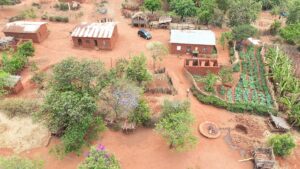





Queen Charles, a 42-year-old mother from Damasca in the area of Traditional Authority (TA) Kameme in Chitipa District, knows what it means to be landless.
After her divorce, she returned home but found that she had no right to land at her parent’s place. Customs said it belonged to her brothers.
From season to season, she wandered from one piece of land to another, farming on small plots each growing season, always uncertain that it would be hers next planting cycle.
“When I returned, I was met with the warm embrace of my family but not with land. For two years, I had no land. I could be allocated a piece of land to farm but the following season, that land could be taken away,” Charles says.
51-year-old Lucy Kafunda from Nankhonza village in the area of TA Mwenewenya, experienced it too.
Divorced in 2010, she returned to live with her parents, but for years she had no secure plot of land. All she could get were small portions of land not enough to cultivate and feed her eight children.
“I had no land of my own and even a house. I had to wait for someone to tell me where I could plant and most of the times, I could not get enough space to grow food for my children. As such I used to depend on others, always begging for support,” Kafunda recalls.
The cultural knot of land and genderFor generations, land in northern Malawi has been governed by deep-rooted customs that prioritize men as inheritors and custodians of property.
The unwritten rule has long been that men own and women marry into ownership.Under the patrilineal system dominant in much of the northern region, land passes from father to son.
Daughters born into the family, have long been considered temporary residents, destined to marry and relocate. When those marriages collapse, women returning to their childhood homes could have no land waiting for them.
The implications have been generational. Where divorced women have no land, their children, too, grew without inheritance rights, prolonging a cycle of landlessness and dependence.
For widows, the story had a slightly different turn. Widows who chose to stay at their late husband’s home could still be recognized as legitimate heirs to the land for their children, but this right has been fragile.
When they chose to return to their parent’s homes, they could often face the same rejection as divorced women. Awareness sparks change. Both Charles and Kafunda are now proud owners of land, ending their years of struggle.
The change came through community awareness programs, run by Smallholder Producers Development and Transporters Association (SPRODETA) through the Integrated Resilience Project (IRP).
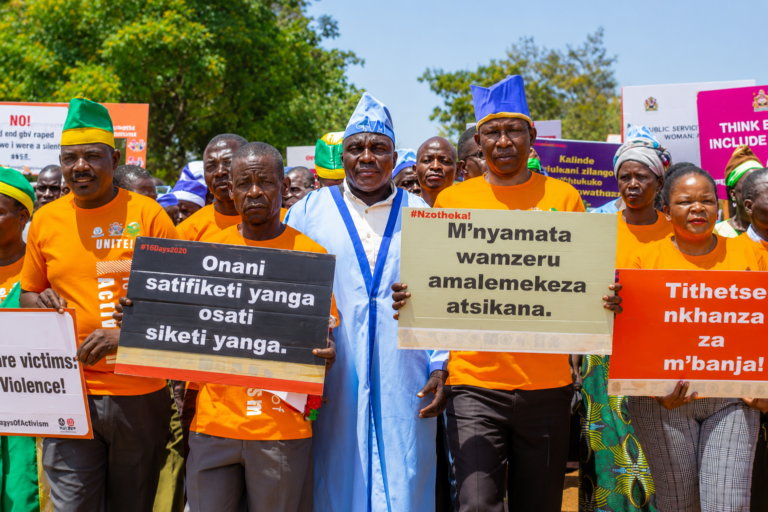
Through the project, the organization trained women, families, and traditional leaders about women’s land rights, the rights backed by the laws of Malawi.
Through these trainings, women like Charles, and men like Kafunda’s brother McBowman Kafunda learned that under the Constitution of Malawi, women have the right to equal protection of the law and the acquisition and retention of property.
They also learned that the Customary Land Act of 2016 recognizes customary land rights and places protections for women and disadvantaged groups including widows, divorced women, and unmarried women to own, inherit, and register land.
Armed with this knowledge, Charles gathered her family and shared what she had learned.
To her surprise, they listened. Her brothers agreed to allocate her 1.5 acres of land.
“Now I have freedom, I am able to farm, I have built a house, and I am able to provide for my children. I am able to pay school fees for my two children, one, in form three and another one in form one. Before, I could not manage to do that,” Charles says.
Lucy’s brother McBowman, did the same.
“After the meeting, I realized that we were holding our sister back. She was raising eight children without land and that had to change. I took the matter to the family and they agreed to allocate her two acres of land with a promise of one more,” he says.
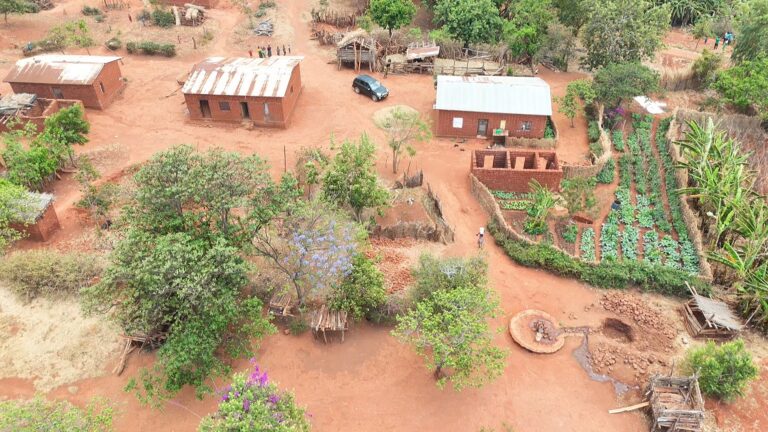
That decision transformed Lucy’s life. Since she was given land, she has been doing well in farming, growing maize, soybeans, and groundnuts. She is also raising rabbits and chickens.
She is also into soap-making business and from that she is able to make enough money to support her children.
“Lucy used to depend on us but now she is a pillar in the family. That is the power of land,” McBowman says with pride.
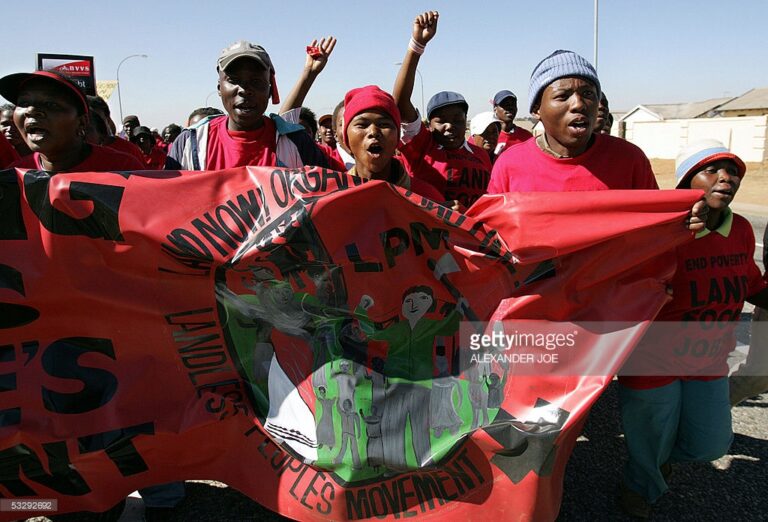
Evidence of progressAccording to SPRODETA, over 100 women in Chitipa and Rumphi have so far accessed land through awareness initiatives.
Some are now in the process of formally registering their land to protect it from future disputes.
“In a patriarchal system, land inheritance has always been male-dominated. Even where a woman is allocated land, control has in many cases remained with brothers. That is why we have been advocating for women’s land rights,” SPRODETA’s Monitoring and Evaluation Officer, Austin Moyo says.
“In communities where women have been given land, we are seeing tangible results. There is improved food security, reduced dependence, and even fewer conflicts. When women have land, the whole family benefits,” Moyo adds.
The Chitipa District Gender Officer Rosemary Mahata reports similar outcomes.
“We are seeing more women being allocated land, especially where chiefs support the change. It is a slow process, but it is progress,” Mahata says.
Leaders guiding the wayTraditional leaders are key in sustaining these shifts, and TA Kameme has been a strong voice for equality in his area.
He says change begins with acknowledging that land is a birthright for all children regardless of sex.
“In the past, people believed that only men needed land but that thinking is wrong. God gives families both sons and daughters. Yes, daughters are married off but when things do not work out and they come back home, they are still our children and we must give them land so they can feed their children,” TA Kameme says.
For families still resisting the change in his area, TA Kameme says he often mediates.
“When such cases come to my office, I call them, we sit together and I explain the importance of giving women land. Things are changing, and we need to move with time and we must stop discriminating. I am glad that many people in my area are changing,” he says.
From awareness to actionRosemary Mahata, Chitipa District Gender Officer says while the change is not in the entire district, it is exciting that in some communities, positive outcomes are being registered.
“The fact that in some communities we are registering positive developments, it means that we are not very far to achieve the goal of honoring women with land acquisition. So, it means that we are moving in the right direct,” Mahata says.
Mahata says considering that there are still some areas where communities are resisting the change, together with NGOs and other stakeholders, they have put in place several interventions aimed at raising awareness.
“We are strengthening the community structures to support women empowerment in terms of land acquisition and other rights, we have women groups as well as gender champions who are also working on the same. We are also working with traditional leaders, so that women are not left out in terms of issues to do with land acquisition,” Mahata says.
She adds; “The challenge is that issues to do with land acquisition by women is attached to mindset. So, issues to do with mindset change takes time and we have to accept that it is a process but by the end of the day, I believe things will change and in time, women will enjoy their right to acquire land.”
Moyo of SPRODETA says as an organization they are still working on getting awareness to communities that still resist so that they should be able to understand the importance of granting land to women.
“Land is one of the key productive resources that the person needs and accessing or providing ownership of land to women, actually not only boost their confidence of ownership but actually it opens doors for economic empowerment,” Moyo says.
A future rooted in equalityFor gender activist Carol Mvalo, these local stories are proof that Malawi’s laws coupled by efforts from various stakeholders, are beginning to bear fruits.
“The Constitution allows every person to own property, land included be it in matrilineal or patrilineal societies.
The Customary Land Act of 2016 ensures that no one should be denied land because of their sex. When women own land, they gain independence and dignity,” Mvalo says.
She adds; “So, if women in patriarchal societies are able to own land, it is welcome development and I feel that women now would be happy, and they would be dependent on themselves because they have land, which at the same time they control.”
Mvalo however, emphasizes the need to push for awareness on land registration as women own land.
“Current laws require that every person who owns land, must register that land. If land is registered, it is secure, it means no one can grab it. This way women can make decisions confidently, knowing the land is truly theirs. This way, even issues of inheritance becomes straightforward,” Mvalo says.
“Because we have also seen in societies where women own land, but it is controlled by men. So, for me as a gender activist I find registration after acquiring land as a positive thing to do,” she says.
Cultural evolution across the regionEven in Mzimba, where opposition to new land laws has been strong, the conversation is shifting. Mzimba Heritage Association (MZIHA) General Secretary Kingsley Jere says the Ngoni culture already recognizes women’s connection to land.
“This is not a new thing to us. The issues we have about the new land laws are not about land ownership for women. The issues we are having with these laws are that they are like taking away the power to manage land from our chiefs, otherwise, for Mzimba, for the kingdom, women land ownership is not an issue,” Jere says.
John Tembo, a citizen of Mzimba is a living example of changing attitudes. Despite his two daughters being married, he has already allocated them their pieces of land.
“I believe in treating all my children equally. If my daughters ever feel they need more land, they can come and farm on their own plots. This is their land too,” Tembo says.
Building a future through landFrom a woman who once wandered for land season after season, Charles now lives with a sense of peace.
Bumper yields are guaranteed and she now takes care of her children without much of a hustle.On the other hand, Kafunda is also at peace. As she tends to her rabbits and she talks about buying iron sheets for her new house.
“When women are given land, they stop being a burden, they become providers and they build the future. We are a living testament to that. We were just surviving but now we are living,” Charles and Kafunda says.