
The Evangelical Association of Malawi (EAM) has challenged civil society organisations (CSOs) and faith leaders to take up the fight for communities living near mining sites and to hold government and mining companies accountable whenever human rights abuses emerge.
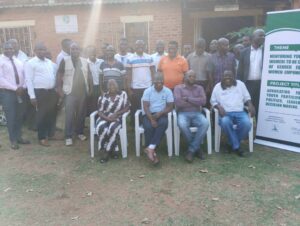
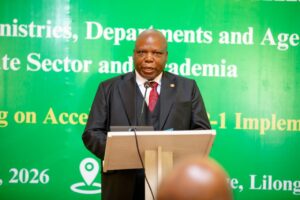
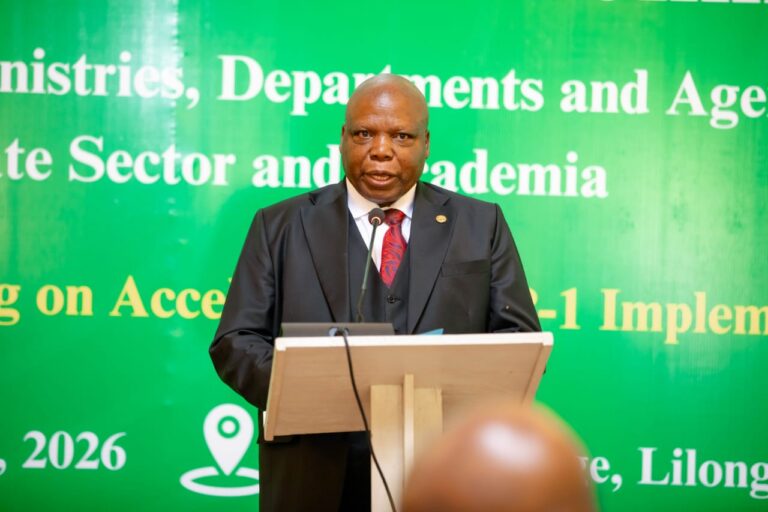
EAM Fighting Inequalities project coordinator Lusungu Kumwenda Mangochi made the call in Lilongwe during a training for faith leaders, CSOs and government institutions on the United Nations Guiding Principles on Business and Human Rights. Companies operating in the mining sector were also invited.
Mangochi said the organisation wants CSOs and faith-based groups to be able to summon government and companies when abuses are reported, and to build capacity within communities through sensitisation, including by bringing duty bearers closer to the people.
“We would like to see these civil society and faith-based organisations take part in advocating for the rights of the people living in the areas housing the mining activities, but also that our duty bearers can be responsive to the emerging issues,” he said.
She said the mining sector faces a plethora of problems, including labour violations, land use disputes, environmental degradation, water pollution, child labour and gender-based violence.
Mangochi added that concerns are also mounting over transparency, the legal and policy framework, and the conduct of some companies.
“There is a lot that’s coming out: issues of transparency, legal framework and policy, companies taking too much volumes of minerals in the name of samples, and companies failing to honour their commitments on corporate social responsibility,” he said.
“What we would like to see at the end of the day is that civil society organisations and church-based organisations can all take part in advocating for the rights of people living in these areas, and that government and mining companies can be responsible for the issues raised,” he said.
Malawi Human Rights Commission (MHRC) deputy director for social and economic rights Lucius Pendame said communities can only hold duty bearers to account if they understand the policies and laws governing the mining sector.
Pendame said the commission’s role is to raise awareness among EAM and its partners about the UN guiding principles and to monitor extractive and other businesses for compliance.
He urged people who know of business activities affecting human rights, particularly those living around mines, to register complaints with the commission, which investigates and works with other regulatory bodies on follow-up.
“Moving forward, the commission is also interested in engaging with partners in making sure that communities know their rights and where to report,” said Pendame.
Faith leaders said the training would equip them to take the message to their congregations. Reverend Mwawi Chilongozi of the Church of Central Africa Presbyterian (CCAP) said it would help them share information on human rights and business in the mining sector.
She described mining as a new industry in Malawi that is bringing challenges, many of them rooted in lack of information. Communities where minerals are extracted often do not know their entitlements or what to ask for, she said.
“With this training, we will be able to inform our communities on what to ask for,” said Chilongozi.