
Note: Names of children have been changed for ethical reasons, and for some, their suggested preferred names have been used.
At 26, Grant is still in Standard Seven at Kaphuta Primary School in Mzimba District, pursuing an education that many people his age completed years ago.
While others have finished secondary school, graduated from university or entered the world of work, he is far from completing his education.
In a country where children ordinarily begin primary school at around six and complete secondary education at approximately 12, before progressing through secondary school, Grant’s journey has taken a difference path.
Grant has an intellectual disability that affects his learning and makes communication difficult. Progress requires patience, individual attention and teaching approaches suited to his needs. But that support has not always been available.
Grant once sat for the Primary School Leaving Certificate Examination and failed. Then he left school. But his ambition survived. Encouraged by a teacher, he returned to the classroom to repeat Standard Seven to pursue his ambition.
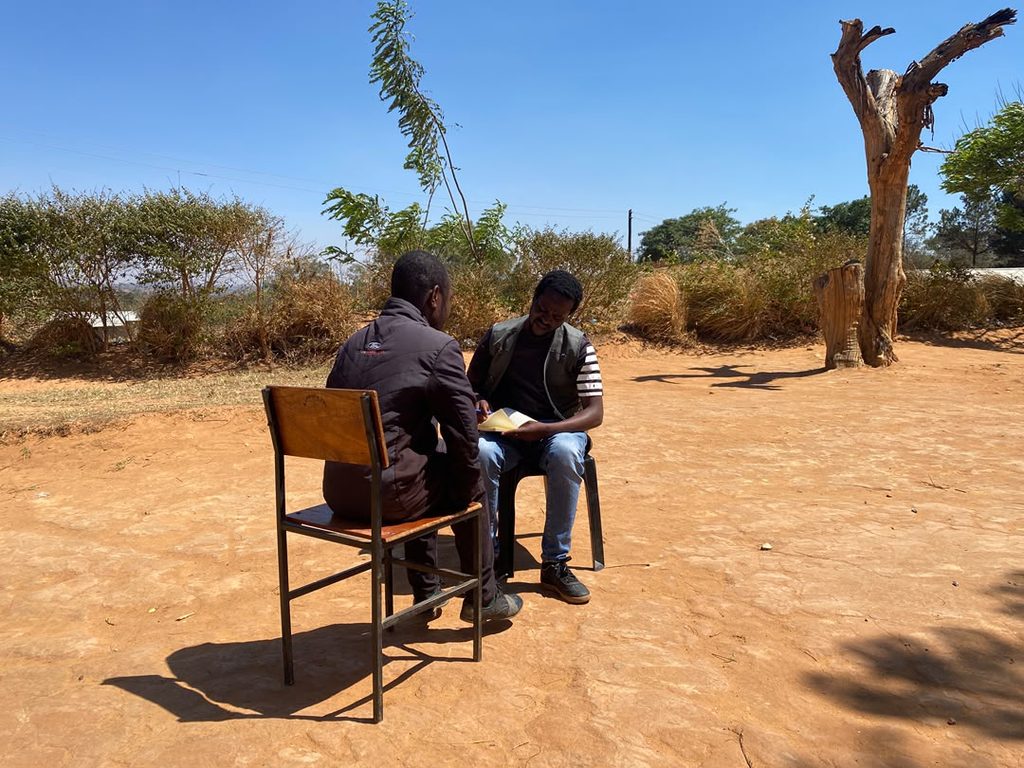
“I believe that education can bring me closer to my ambition, and that is why I am back in school,” Grant, who hopes to become a Catholic Church Bishop, says.
His story is one of determination, but it also raises a difficult question: why should a learner have to spend so many years pursuing a basic education simply because he learns differently?
When a lesson takes days
At around nine years old, Berister Kachione’s daughter is in standard two at the same school as Grant. Her intellectual disability affects speech, making it difficult for her to communicate verbally and express herself during conversations.
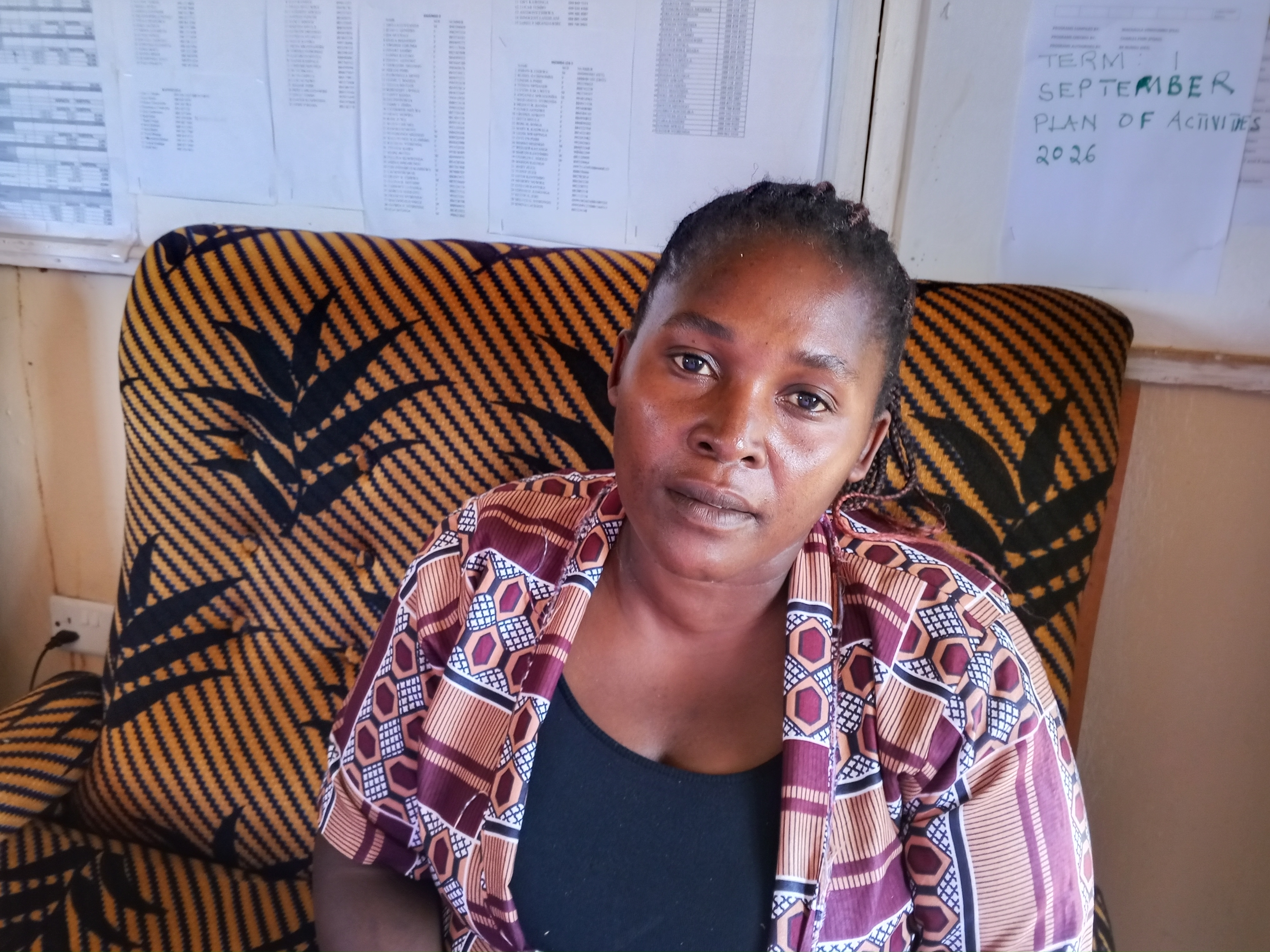
When approached for an interview, the child was unable to respond to the questions about her own experiences, leaving her mother to speak on her behalf.
Kachione remembers how difficult it was for her daughter to make friends and how long it took some teachers to understand her needs.
“It took time for my child to find friends as she had difficulties interacting with friends,” Kachione says. “It also took time for teachers to understand her; some were not ready to help her, and others were just ignoring her as if they saw nobody.”
Kachione says, while understanding has improved, support is still needed after the school day ends.
“A teacher can teach; she understands nothing, then I need to go home and go through the same work again,” she says. “It takes some days for her to understand a single task.”
Kachione is herself a specialist teacher at the school. She worries that children whose parents lack teaching experience, time or resources may have even less support.
“Many learners are out there; mine is lucky that I am a teacher,” she says. “The government needs to train more teachers in special needs education. This can be a very big help to learners with intellectual disabilities and other disabilities.”
Too few teachers, too few tools
Kachione’s concerns extend beyond her own family. As a specialist teacher, she sees the same challenges from the other side of the classroom, where the shortage of trained personnel and appropriate teaching materials can make inclusive education difficult to deliver.
She says children with intellectual disabilities learn better when teachers use practical, concrete materials rather than relying entirely on verbal explanations. But providing that kind of support, she says, is difficult when few teachers have the necessary training.
“Speaking only cannot assist a learner with intellectual disability,” Kachione says. “Appropriate learning materials and practical demonstrations can help children engage with lessons and grasp concepts more effectively.”
The challenge extends across Kaphuta Education Zone, which has ten public schools and five private schools. Wachaula Vinkhumbo, the Primary Education Advisor for the Zone, says specialist teachers are available in six public schools and two private schools.
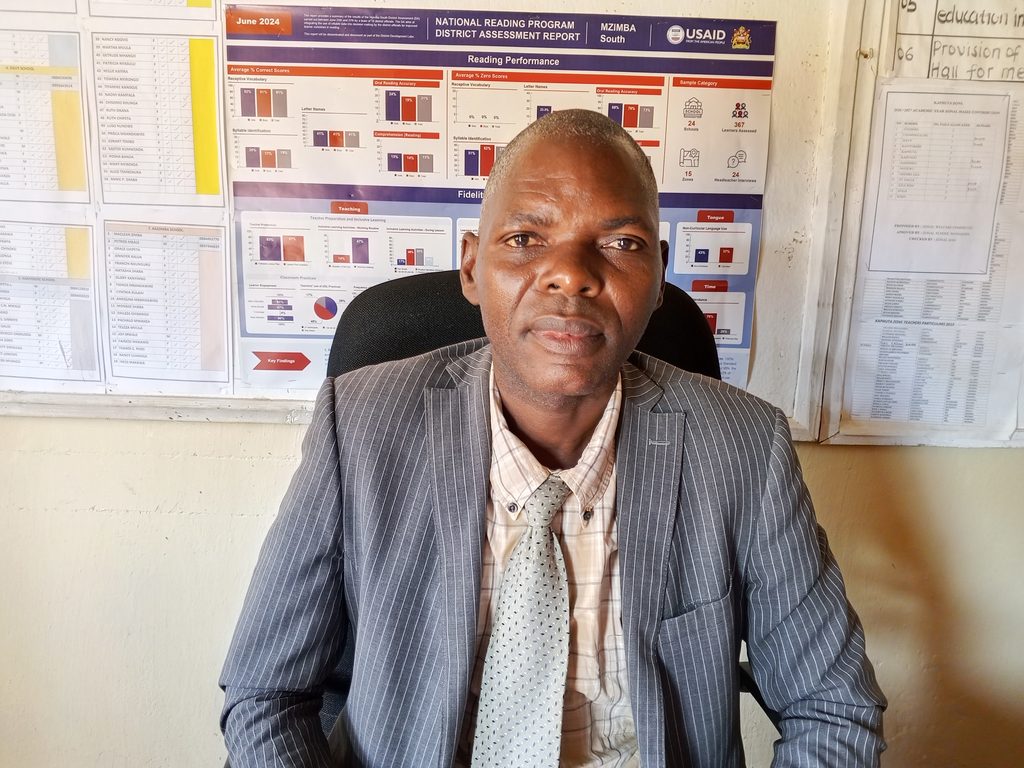
Families whose nearest school has no specialist teacher may have to travel farther to find support, or enroll their child at a nearby school where appropriate instruction may be limited.
Even where schools welcome learners with intellectual disabilities, Vinkhumbo says, the shortage of suitable teaching and learning materials remains a serious obstacle.
“Teaching a concept to a learner who needs practical demonstrations, repeated explanations or visual and concrete materials requires more than delivering a lesson verbally. Without suitable resources, teachers are struggling to make the content understandable,” Vinkhumbo says.
National figures show a huge gap
The figures from Kaphuta Zone offer a local picture of an uneven availability of specialist teachers.
Figures from the Ministry of Education, Science and Technology record approximately 228,000 learners enrolled in primary special-needs education. Of these 122,137 are listed under the category of learning difficulties.
Yet the country has 184 specialist teachers specifically trained to teach learners with intellectual disabilities. 98 at primary level and 86 at secondary level.
The figures suggest a significant gap between learners recorded under learning difficulties and the availability of teachers specifically trained in intellectual disabilities. The recommended teacher-to-learner ration for learning difficulties is one teacher for every ten learners.
“Judging by the current situation of 184 available teachers, there is a great need for more specialist teachers to support learners with intellectual disabilities,” Lily Kampani, Ministry of Education, Science, and Technology spokesperson, says.
A journey that challenges assumptions
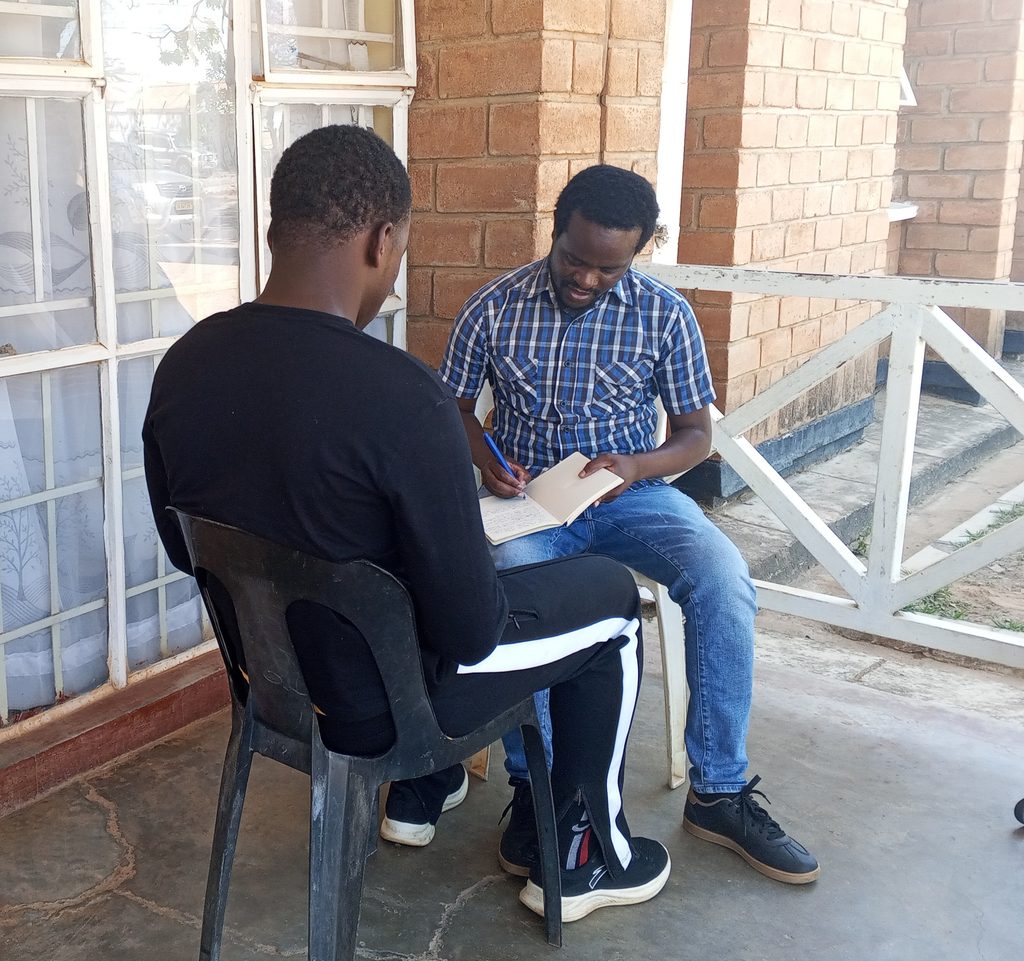
Behind these figures are children trying to understand a lesson, parents repeating schoolwork at home, and teachers expected to meet the different learning needs with limited specialist support.
But inadequate support does not tell us what these children are capable of achieving. For that, consider the experience of 19-year-old Kamsasa, who has completed secondary school despite years of difficulty, discrimination, and misunderstanding.
Kamsasa is a preferred name, not his real name. He chose it because he does not know his home village, although he knows who his parents are. The name translates as a tent made from grass, something he says resonates with his education journey.
“My education journey is filled with tears, endurance, disappointments, resilience, and hard work. To be where I am today, I consider this victory,” Kamsasa says.
His journey followed difficult years at school. He struggled during Standard Five and Six, lost interest in learning and considered leaving. After repeating Standard Six, he regained his determination.
“I made a vow not to repeat another class in my life,” he says.
That motivation carried him through primary school to Mzimba Secondary School, where he continued performing well and eventually graduated with 16 points in the 2025/26 examinations.
Yet his achievements came against a background of misunderstanding and abuse. Kamsasa says he sometimes talks aloud to himself, a behavior which leads people to mistake his condition for a mental health problem.
He has been called names and bullied, and even some relatives call him insane. His grandmother, however, encourages him to believe in his abilities and was a pillar of his perseverance in school.
“I call her a friend of my journey because she understands my behavior even when I do something people don’t understand; she always stands by my side,” he says.
Now, having completed secondary school, he hopes to pursue university studies, with International Relations and Diplomacy among his preferred choices. He is also considering Public Administration and education-related courses.
Beyond university, he dreams of establishing the Kamsasa Foundation, a home where people who feel hopeless and orphans can find support, rebuild their lives and acquire practical skills.
A place to belong
Academic achievement is one measure of inclusion. Belonging is another.
At 16, another learner, known in this story as Nyamwezi, is in Standard Eight. He chose the name after coming across it in a story he read.
Nyamwezi hopes to join the Malawi Defense Force. For him, school is not simply a place to study. It is a place to connect with people.
But, like Kamsasa, Nyamwezi says he experiences bullying and teasing because of his disability, but he tries not to let that treatment discourage him.
“I know, no person can be 100 percent. Others bully and tease me because of my disability, but I don’t mind them,” he says.
Still, his experiences raise a question about what inclusion really means when a learner can attend school but cannot always count on being accepted by classmates.
Misheck, a learner without a disability, believes children should be free to form friendships without being pushed aside because they are different, and he appeals to fellow learners to be welcoming.
“We need to stay with them without discriminating them, be friends with them, not chasing them because they are not like us. We are all equal,” Misheck says.
Another learner, Lydia, makes a similar appeal.
“I want everyone to be treating our friends with intellectual disabilities with harmony, without teasing and bullying them,” she says.
Their words point to something that statistics alone cannot capture. A child may be enrolled in school and have a place to sit in class, yet still feel excluded through bullying, isolation or the attitudes of others.
Creating an environment where every learner belongs
Creating a genuinely inclusive school therefore requires more than physical access to education. It requires an environment where learners can participate, build friendships and pursue their ambitions without being treated as less deserving.
Enid Mauluka, the National Coordinator for Special Olympics Malawi, says creating such an environment begins with changing how families, teachers and communities understand intellectual disabilities.
“Basically, stereotypes,” Mauluka says, explaining that some people assume children with intellectual disabilities cannot achieve much, while others associate disability with curses or witchcraft.
To challenge this, Special Olympics raises awareness at the family and community level. Through household forums, the organization educates families about intellectual disabilities and the rights of affected children, while community clubs help extend these conversations beyond home.
The aim is to encourage families to support their children, recognize their abilities and send them to school rather than keeping them at home.
At school level, the organization, which works with around 30,000 learners through sports, encourages learners with and without intellectual disabilities to interact, participate in shared activities and take on responsibilities.
“These opportunities help challenge the assumption that children with intellectual disabilities cannot lead or contribute meaningfully. We believe that with awareness and support, learners can learn to accept one another. The first thing is to look at a person with disability as someone who is just like you,” Mauluka says.
For Mauluka, the wider change required is to stop viewing people with intellectual disabilities through pity or assumptions about what they cannot do, and instead give them the same opportunities to develop their abilities.
“Allow them to explore, give them equal opportunities just like you are giving a person without an intellectual disability and see how far they can go,” she says.
Learners ask for equal chances
Changing attitudes is important. But for learners with intellectual disabilities, inclusion must go beyond awareness campaigns and good intentions. They want practical changes that can make a difference in their everyday school lives.
Kamsasa, who has completed secondary school, wants special needs education incorporated into teacher training, so that teachers are well equipped right from college to help learners with intellectual disabilities.
“If I had the opportunity to meet the Minister of Education, I would also ask him to include issues of disability in the syllabus for people to understand disability, incorporate special needs education in teacher training colleges, and encourage conversation around disabilities, including intellectual,” he says.
For Grant, the priority is more specialist teachers who can make learning easier for children with intellectual disabilities and activities, including sports, to help stimulate and encourage learners with intellectual disabilities.
For Nyamwezi, inclusion also means ensuring that children with disabilities can access school and participate in everyday school activities. He wants children with disabilities to learn, interact, and build friendships without stigma or discrimination.
Their requests are not about lowering educational expectations. They are asking for the support, opportunities, and acceptance.
These are voices of learners who understand, from personal experience, what is missing from the classrooms they attend.
The question now is whether the systems responsible for their education can turn these requests into practical support.
Government promises
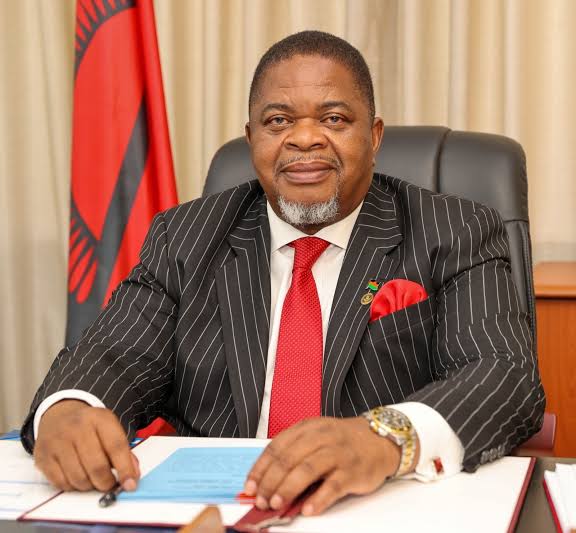
The government recognizes inclusive education as a policy priority. Bright Msaka, the Minister of Education, Science and Technology, says the policy is intended to ensure that no child is left behind.
“Our policy is not to leave any child behind and therefore, we have put in place mechanisms for intervening and making sure that children with various challenges are given special attention in order for them to acquire the education that is needed,” he says.
The Minister explains that remedial classes are one way of supporting learners who struggle to understand lessons. He says, teachers may give additional instruction outside normal class time, allowing learners more time to grasp material they did not understand during ordinary lessons.
He acknowledges the need to increase the number of specialist teachers and allocate enough and necessary resources that would make learning easy for learners with intellectual disabilities.
“For generations, the entire Malawi government has been depending on specialist teachers coming from Montfort College in Chiradzulu. But now, the government wants to turn Machinga Teacher Training College into a 100 percent Special Needs College to increase the number of specialist teachers,” Msaka says.
The college is envisaged to be fully operational by 2028, and when fully operational, it is envisioned that it would be enrolling 560 student teachers every year.
The long-term ambition, Msaka says, is to reach a point where every school has at least one specialist teacher in special needs education. It is an important commitment, particularly in light of uneven distribution of teachers across the country.
Responding to Kamsasa’s request on incorporating special needs in teacher training, Msaka says that while it is a good suggestion, it will provide basic knowledge of special needs.
He argues that what the country now needs are teachers with extensive training in special needs, which Machinga College will provide.
“That is a very interesting suggestion, but the problem there is that the knowledge acquired by those teachers would be the basic knowledge. What we need at the end of the day are specialist teachers well trained, the entire period of training dedicated to learning about special needs education,” he says.
He adds: “I think, what that young man was proposing is to increase the number of specialist teachers. We believe that we will be producing more teachers at Machinga College, so that eventually, we can achieve a situation where at every school there is at least one specialist teacher in special needs.”
A right that must be felt in a classroom
Malawi’s commitment to inclusive education is reflected in its legal and policy frameworks, including the Constitution, disability and education legislation and international commitments such as the United Nations Convention on the Rights of Persons with Disabilities
The country’s development blueprint, Malawi 2063, also places human capital development among the country’s long-term priorities, while Sustainable Development Goal 4 calls for inclusive and equitable quality education.
These commitments establish an important principle: children with intellectual disabilities are entitled to education, participation and equal treatment. Inclusion is not a favor granted by an individual teacher or school.
But a commitment on paper cannot teach a lesson, supply a missing resource or prevent a child from being bullied. Its value must be seen in the daily experiences of learners.
No child should have to prove they are worthy of an education by enduring years of struggle. The right to education must be felt in the classroom, not only repeated policy statements.
This reporting was supported by Moxii Africa as part of the 2026 Isue Elihle Awards.