



…Dual roles of MPs and ministers fuel constitutional debate…
Malawians elect Members of Parliament (MPs) to represent their interests in the August House, but concerns are growing over how effectively some legislators perform that role once they are appointed to serve as Cabinet ministers.
Critics argue that MPs who join the Executive have less time to represent their constituents and participate fully in parliamentary business.
While other legislators scrutinize budget allocations, debate bills and lobby for development projects in their constituencies, MPs serving as Cabinet ministers are often occupied with executive and national duties.
This has reignited debate over whether Malawi should maintain the current arrangement or amend Section 67 of the Constitution, which governs the relationship between Parliament and the Executive.
Veteran politician and long-serving Alliance for Democracy (AFORD) member Dan Msowoya says the Constitution presents conflicting provisions on the separation of powers.
He says Section 6 clearly outlines the roles of the three arms of government: Parliament makes laws, the Executive implements them, and the Judiciary interprets them.
“The idea is simple: to separate powers and functions so that no arm of government becomes too powerful and each can effectively check the other. But Section 6 is now in tension with another part of our Constitution, Section 67(2),” says Msowoya.
According to Msowoya, Section 67(2) allows an MP to hold the office of Minister, creating what he describes as a constitutional contradiction.
“This creates two problems. First, accountability. How can a Minister, who is also a Member of Parliament, be properly questioned in Parliament? It becomes like marking your own homework. Secondly, look at the President. Once elected, Section 80 requires the President to vacate a parliamentary seat. So the President cannot be an MP, but a Minister can. One rule for the President and another for Ministers. That is not coherent,” he argues.
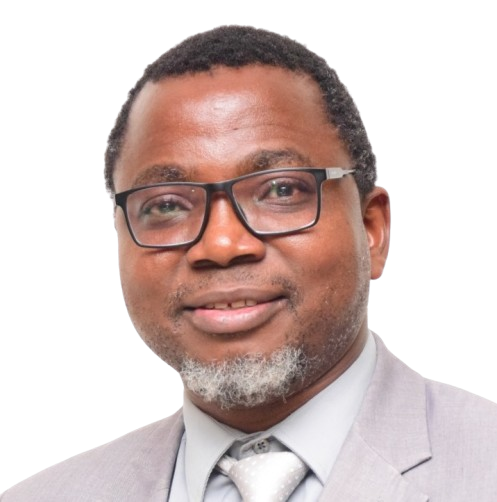
Governance and democracy expert Dr Augustine Magolowondo also says Malawi lacks clear benchmarks for assessing the performance of elected leaders.
He says MPs are expected to represent constituents, make laws and exercise oversight over the Executive, responsibilities that become difficult to fulfil once they assume ministerial positions.
“This role is significantly undermined by the socio-economic realities they face. I acknowledge the limitations of MPs who also serve as Cabinet Ministers. They cannot effectively perform the oversight role,” he explains.
“They are implementing government policies and proposing those same policies. They are, therefore, among those who Parliament should scrutinise.”
Magolowondo adds that balancing executive responsibilities with parliamentary duties presents a significant challenge.
“From the point of oversight, they are compromised. From the point of representation, they have a mammoth task because they must perform executive functions while also serving as Parliamentarians. That is not an easy balance.”
These views are echoed by members of the electorate. While some believe certain MPs successfully balance both responsibilities, others say ministerial duties reduce their accessibility to constituents.
Mustafa Masi from Chiradzulu says ministers can use their influence to accelerate development projects in their constituencies but warns that their demanding schedules often limit interaction with voters.
“This issue is very tricky and debatable. A Minister may use his or her position to influence development projects through direct engagement with government departments. However, the heavy ministerial workload often limits the time available to visit and listen to people in the constituency,” says Masi.
He adds that many ministers delegate constituency responsibilities to political aides or relatives, raising concerns about whether constituents’ concerns are effectively communicated.
Ainess Banda from Chikwawa believes MPs serving as ministers can succeed in both roles provided they remain accountable to the people who elected them.
“They should stay connected with their constituents, listen to their concerns and ensure those issues are addressed through Parliament and government. What matters most is not just physical presence, but effective representation, communication and delivering results,” she says.
Fred Adam from Lilongwe shares a different view.
“If an MP is also a Minister, it becomes very difficult to perform both roles effectively. The workload of a Minister cannot be compared to that of an ordinary MP. As a result, many Ministers are rarely available in their constituencies, and that becomes a problem,” he says.
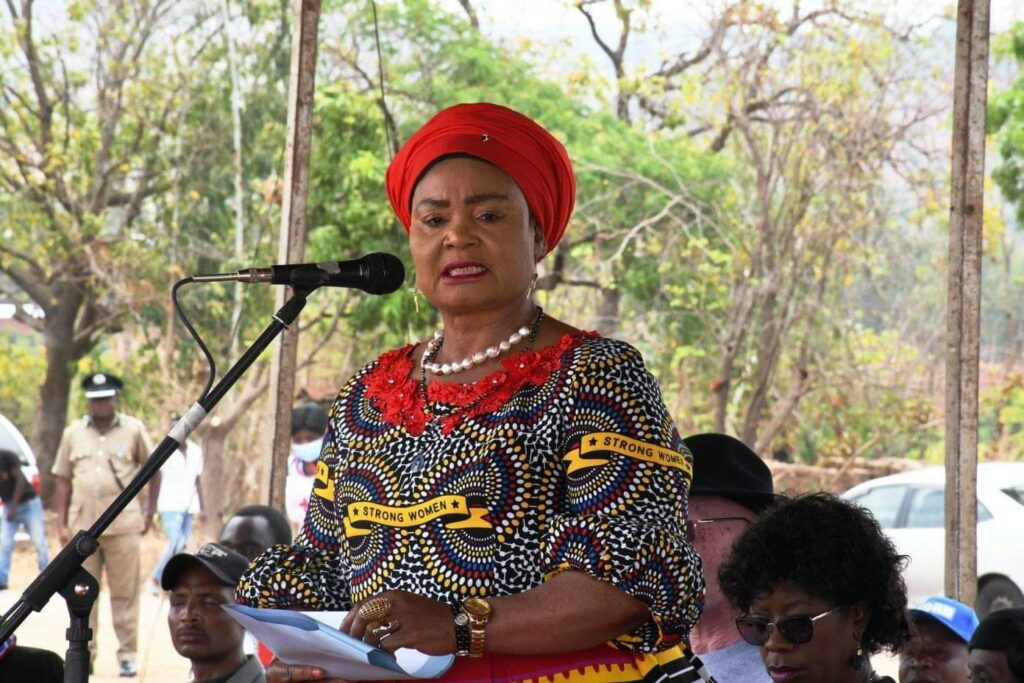
However, veteran politician Patricia Kaliati, who has served as both an MP and Cabinet Minister under the United Democratic Front (UDF), Democratic Progressive Party (DPP) and now the UTM Party, believes the two roles can be managed effectively.
“It’s really possible. Serving in Cabinet does not mean you cannot find time to visit your constituents. Weekends and public holidays provide opportunities to engage with the people who elected you,” she says.
Records show that in 1997, in the case of Fred Nseula versus the Attorney General, High Court Judge Dunstain Mwaungulu ruled that MPs could not simultaneously serve as Cabinet Ministers or Deputy Ministers.
Mwaungulu held that accepting a ministerial appointment amounted to assuming another public office, automatically vacating a parliamentary seat.
However, the matter later went before the Supreme Court of Appeal, which reached a different conclusion.
Malawi Law Commission Senior Deputy Director of Law Reform and Information, Robert Kandulu, says the Supreme Court ruled that it is constitutional for MPs to also serve as Cabinet Ministers.
“The Supreme Court concluded that the definition of a public office under the General Interpretation Act cannot automatically be applied to constitutional matters. A public office refers to positions in the civil service or those specifically designated as such,” he explains.
“So, based on the Supreme Court’s interpretation, a Minister can also be an MP, and that is the current legal position. Those who disagree may advocate for constitutional amendments, but that is a separate matter.”
More than two decades after the ruling, debate over the separation of powers continues.
Magolowondo says the issue deserves continued national dialogue.
“There is an advantage because Cabinet Ministers have direct access to decision-makers. However, they must remember they are also Parliamentarians. It is a difficult balance, and one that requires serious national conversation because the overlap compromises Parliament’s oversight role,” he says.
Msowoya also points to countries such as Kenya, Zambia, Ghana and Tanzania, where Cabinet ministers are appointed from outside Parliament.
“In these countries, ministers come to Parliament to answer questions and be held accountable. Talent is not confined to Parliament. We need oversight to be meaningful. We should consider amending Section 67(2) of our Constitution,” he says.
He proposes an amendment stating that no person should simultaneously serve as both a Member of Parliament and a member of the Executive.
“We’re not attacking anyone. This is not about individuals or political parties. It is about strengthening institutions and building the Malawi we want for future generations. If we allow shortcuts today, what stops future governments from taking even more shortcuts tomorrow?” he asks.
Members of Parliament have three key responsibilities: making laws, providing oversight of government policies and expenditure, and representing their constituents.
These responsibilities align with Sustainable Development Goal 16, which promotes peace, justice and strong institutions through transparent, inclusive and accountable governance.
Ultimately, voters continue to queue for hours on election day expecting to elect representatives who will effectively champion their interests, regardless of any executive responsibilities they may later assume.