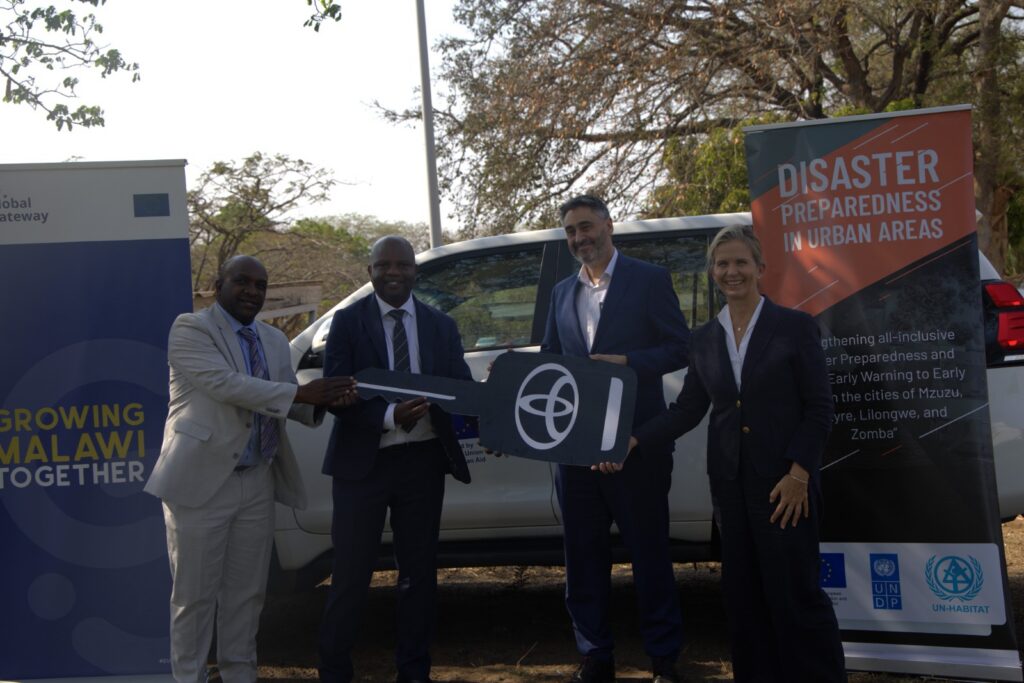




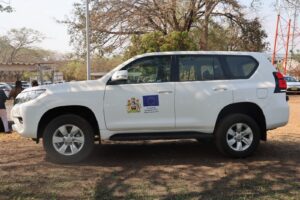
The European Union and the United Nations Development Programme (UNDP) have handed over a vehicle to the Department of Disaster Management Affairs (DoDMA) to strengthen the department’s capacity to prepare for and respond to disasters across Malawi.
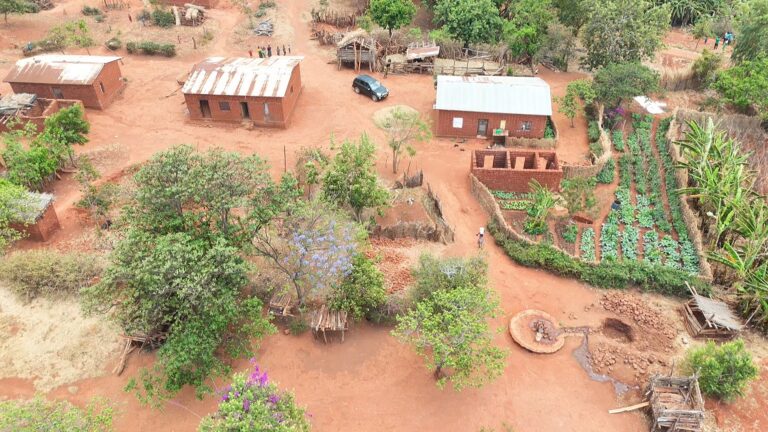
The vehicle was procured under the European Civil Protection and Humanitarian Aid Operations (DG ECHO)-funded project, Strengthening All-Inclusive Disaster Preparedness and Linking Early Warning to Early Action in Mzuzu, Blantyre, Lilongwe and Zomba City Councils.
The 2½-year project ran from January 2023 to June 2025 and was implemented by UNDP in partnership with UN-Habitat and the Government of Malawi, with other partners including Habitat for Humanity and Malawi University of Business and Applied Sciences.
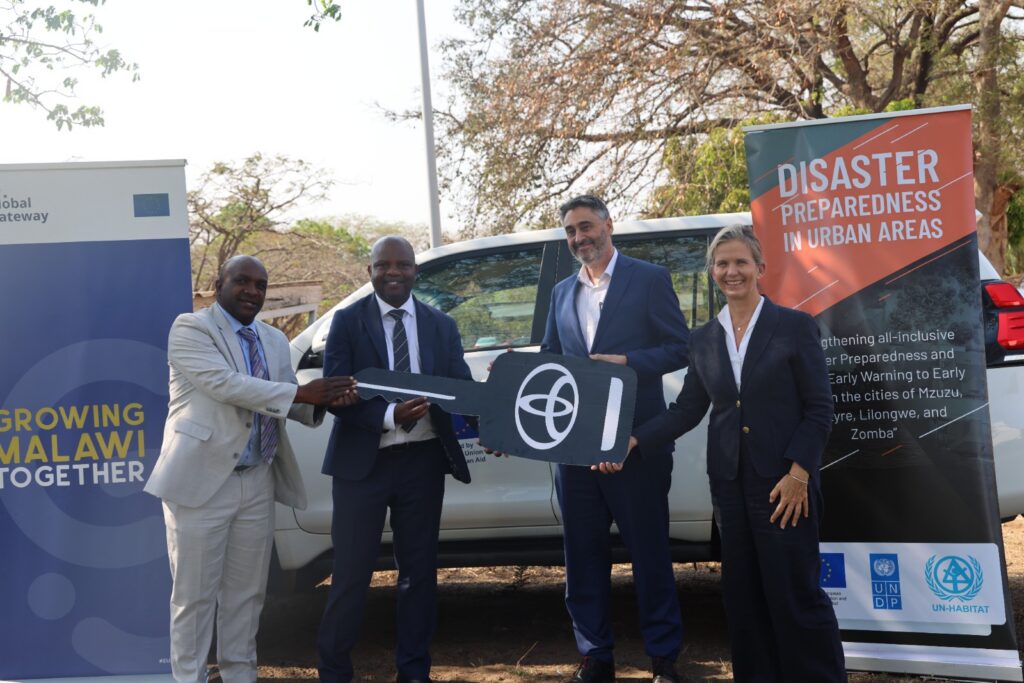
Speaking during the handover ceremony, EU Ambassador Daniel Aristi Gaztelumendi said the vehicle represents more than transport, describing it as part of the operational capacity needed to reach communities quickly during emergencies.
“Preparedness saves lives,” Gaztelumendi said, stressing the importance of mobility in assessing needs, coordinating responses and reaching communities affected by floods, storms and other climate-related shocks.
He said the vehicle would support DoDMA in carrying out its mandate with greater reach, speed and effectiveness, particularly as Malawi prepares to respond to the 2026/27 El Niño season.
Gaztelumendi said the project had also supported disaster preparedness in Blantyre, Zomba, Lilongwe and Mzuzu, with the broader objective of strengthening the link between early warning and early action.
According to the EU, the project reached nearly 400,000 people through interventions implemented at community, city and national levels.
UNDP Resident Representative Fenella Frost said the vehicle was a tangible investment in DoDMA’s ability to anticipate, prepare for and respond to disasters.
Frost said the project had strengthened urban disaster preparedness at a time when Malawi is increasingly exposed to climate-related hazards, particularly flooding in urban areas.
Among the project’s key achievements, she said, was support for an Impact-Based Flood Forecasting system in Blantyre, which brought together weather forecasts, hydrological modelling, rainfall and water-level monitoring.
She said the initiative also strengthened City and Ward Disaster Risk Management Committees and supported 376,811 people across 16 wards through contingency planning and resources for priority preparedness actions.
The project also supported drainage rehabilitation and community-led drainage clearing, improving drainage systems serving about 198,444 people, according to Frost.
In Lilongwe and Mzuzu, she said, the City Resilience Action Planning approach was used to identify risks, priority actions and potential investments to strengthen urban resilience.
The project also included a crisis modifier mechanism that enabled rapid assistance to 1,458 households affected by Cyclone Jude in Mulanje District.
Frost said the programme further strengthened community accountability mechanisms and built capacity for cash preparedness and shock-responsive social protection.
“These results demonstrate an important principle: preparedness is not simply about responding faster after a disaster. It is about investing early so that the impacts of disasters are reduced in the first place,” she said.
The UNDP representative said the systems, capacities and partnerships developed through the project would provide a foundation for Malawi’s preparedness for the 2026/27 El Niño season.
She said the focus going forward should be on closing the gap between knowing that a hazard is approaching and taking action early enough to reduce its impact.
Commissioner for Disaster Management Affairs Wilson Moleni said the vehicle would support preparedness, early warning, anticipatory action, assessments, coordination and emergency response.
Moleni said Malawi continues to face multiple hazards, including floods, droughts, storms and cyclones, making investment in preparedness and early action essential.
He said the experiences from recent disasters, including Tropical Cyclone Freddy, had demonstrated the need to move beyond responding after disasters occur and instead anticipate risks and act before their impacts are felt.
“The vehicle is much more than a means of transport as it is an operational tool that will support preparedness, early warning, anticipatory action, assessments, coordination and emergency response,” Moleni said.
He said DoDMA would ensure that the vehicle was properly managed, maintained and used responsibly as part of the department’s institutional assets.
Moleni said the handover represented a shared commitment between the government and its development partners to strengthen Malawi’s disaster management system.
He called for continued investment in risk information, forecasting, early warning systems, anticipatory action, contingency planning, community preparedness and emergency coordination.
The project was designed to address systemic challenges including ineffective early warning systems, weak Civil Protection Committees, limited policy implementation and vulnerabilities linked to gender and disability disparities.
Its interventions included strengthening disaster risk management committees with skills and tools, establishing evacuation routes and centres, improving flood forecasting and supporting community preparedness.
An assessment of the project found that while the initiative had made progress in strengthening preparedness and local capacity, long-term sustainability would depend on the availability of local resources.
Financial sustainability was identified as a major challenge, particularly for maintaining infrastructure and continuing training activities after external funding ends.
The project also identified high community ownership and the integration of interventions into existing disaster risk management structures as factors supporting sustainability.
The assessment further noted that capacity-building activities were delivered efficiently through partnerships and co-financing, although inflation and currency fluctuations increased implementation costs.
The partners said lessons from the project included the importance of incentives for urban community participation, careful engagement with elected officials, integrating training with essential municipal services, enforcing legal frameworks and using livelihood interventions to strengthen household resilience.
The partners have also stressed the need to build sustainability into disaster preparedness programmes from the design stage, including through resource mobilisation and integrating activities into local government work plans and budgets.