




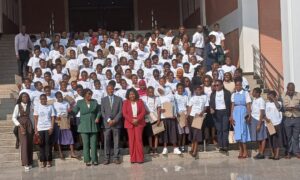
The new Vice Chancellor of the Malawi University of Science and Technology (MUST), Mwapatsa Mipando, has urged secondary school girls to pursue science subjects, saying increased participation of girls is essential to advancing scientific innovation in the country.
Mipando was speaking during the closing of a two-week Science, Technology, Engineering, Arts and Mathematics (STEAM) camp held at MUST, which brought together 83 top-performing girls from various public and private secondary schools.
According to Mipando, the camp was designed to break the fear among girls that science is not for them, and to encourage them to believe in their ability to excel in science-related fields.
“We want, first and foremost, to encourage the girl child not to fear undertaking studies in sciences. So we want to make sure that we break that fear where some girls would say, ‘No, I cannot do science because science is not for girls,'” he said.
Mipando also encouraged the girls to consider studying at MUST, noting that the university is focused on providing solutions to the challenges facing Malawi through research and innovation. He said that having more girls studying science would contribute to producing professionals capable of developing solutions for both Malawi and the wider region.
The Vice Chancellor added that the university aims to become globally recognised while remaining locally relevant, with a strong focus on research and its impact on society.
The camp’s main motivational speaker, Chartered Accountant Chrisy Maliseni — who was among the top three science students in the 1990s Malawi School Certificate of Education (MSCE) examinations — also encouraged the girls to develop a strong interest in STEM subjects.
Maliseni said her passion for STEM and her desire to promote girls in the field motivated her to participate in the camp, adding that she has always wanted to mentor and encourage young people to believe in themselves and pursue STEM studies.
“There’s always a myth that says a girl child cannot do STEM. So all my life growing up, I have been so passionate about STEM,” she said.
Meanwhile, one of the participants, Lingalathu Chingwanda, said the camp provided practical knowledge and helped the girls connect what they learn in school with real-life applications.
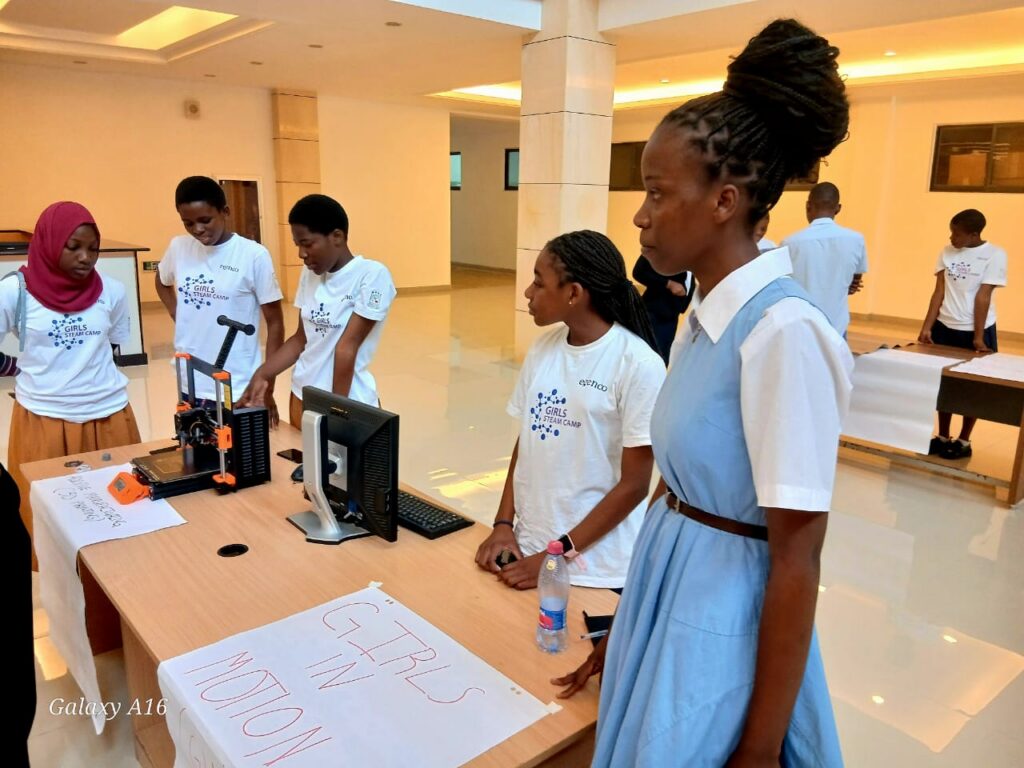
She said participants learned how to fly drones, detect plant diseases, apply cybersecurity skills, and develop different prototypes and portfolios.
The 2026 STEAM camp exposed participants to a range of innovations, including drone technology, 3D printing and mushroom production, as part of broader efforts to encourage more girls to take up science-related studies and careers through hands-on exposure to Science, Technology, Engineering, Arts and Mathematics.