





The Chairperson of the Parliamentary Committee on Social Welfare and Community Affairs, Savel Kafwafwa, has noted that a lack of by-laws to curb child marriages, coupled with inadequate education infrastructure, is contributing to school dropouts in Mangochi District.
Kafwafwa said this on Friday, 18 September 2026, at Mangale Primary School under Senior Chief Chowe, where the committee was reviewing thematic issues including laws, budgetary allocations, and social factors affecting the school.
He said community leaders and members should devise by-laws to support the proposed stand-alone law on ending child marriages, and should be empowered to enforce them.
“We have seen that by engaging local leadership and other stakeholders, we would be able to enforce local punishments and help address both early marriages and child labour,” he said.
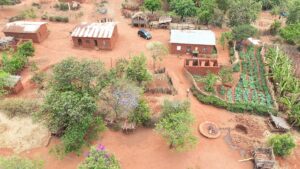
He further stressed that the situation at Mangale Primary School — which is operating without water or teachers’ houses — is demotivating for both learners and teachers.
Principal Child Affairs Officer in the Ministry of Gender, Children, Disability and Social Welfare, Stephano Joseph, said that while Malawi has laws to protect children, gaps in these laws continue to allow child marriages in districts like Mangochi.
He urged parliamentarians to understand and support the SADC Model Law on Ending Child Marriage — a regional law aimed at standardising and strengthening legislation across SADC countries.
Unlike current laws, which have loopholes around customary marriages and parental consent, the Model Law will criminalise child marriages and impose stiff penalties, while also protecting girls already in marriage and ensuring they return to school.
The Centre for Youth Empowerment and Civic Education (CYECE) Executive Director, Lucky Mbewe, appealed for sustainable investment in the education sector, noting that most school infrastructure does not meet the standards required to safeguard children’s right to education.
“It is disappointing to have schools that shut down when it rains and that do not align with the recommended teacher-learner ratio,” he added.
Mangale Primary School has an enrollment of about 900 learners against 12 teachers — a ratio of one teacher to 75 learners, above the standard ratio of 1:60.
Meanwhile, Mother Group representative Emily Maulidi blamed the negligence of some chiefs and guardians who look the other way and effectively support child marriages. She urged them to support government and partner interventions aimed at protecting the girl child.
In his remarks, Senior Chief Chowe applauded the Parliamentary Committee on Social Welfare, the Ministry, and its partners for bringing the national discussion to the community level. He pledged to intensify community advocacy to ensure every girl child stays in school.
The Parliamentary Committee on Social Welfare, officials from the Ministry of Gender and Social Welfare, and the NGO Coalition on Child Rights (NGO-CCR) visited Mangale Primary School to assess the challenges behind low enrollment, and engaged parents and community leaders to find local solutions to curb child marriages.
The engagement is part of the Coalition on Child Rights (CCR) programme, funded through the Children Investment Fund Foundation (CIFF) project with support from UNICEF, which is championing law reform advocacy to end child marriages in ten districts across the country, including Mangochi.