



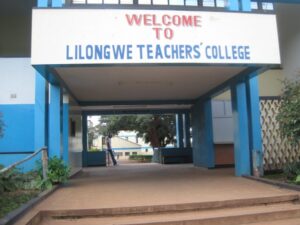
The Ministry of Education, Science and Technology has shifted the introduction of diploma and degree programs for primary school teachers in Teacher Training Colleges (TTCs) to the 2028-29 academic year.
The diploma and degree programs form part of the government’s education reforms over the next five years and have the potential to transform the education sector at all levels in Malawi.
Speaking to Capital FM, the Ministry’s spokesperson Lily Kampani said, the Ministry is still doing preparatory work for the successful rollout of the new programs.
“Stakeholder consultations and benchmarking with SADC countries have been completed, while curriculum development is underway through the Malawi Institute of Education (MIE),” Kampani said.
“The next steps include finalizing the curriculum, preparing TTCs for accreditation by the National Council for Higher Education (NCHE), and upgrading lecturers’ qualifications. If implementation proceeds as planned, the rollout will begin in the 2028-29 academic year,” she said.
Initially, the Ministry announced to roll out the new programs during the 2025-26 academic year before rescheduling the implementation to the 2026-27 academic year.
Commenting on the postponement, education expert Lexon Ndalama said the delays are bound to affect the achievement of targets under the National Education Sector Investment Plan.
“Because the reason the diploma and degree programs were to be introduced is that the level of development in the primary school education sector, in terms of the curriculum and programs accompanying it, requires that teachers who manage these programs should have that level of education,” Ndalama said.
He added: “So, it actually shows that there will be a mismatch between what is being implemented and the people implementing the agenda in terms of skills, and that will definitely have a negative impact on the standard of education.”
Ndalama said the continued delays make it easy to conclude that the government is not committed to delivering quality education.
“What is important every time is prioritize what we think is important, and in terms of education, the quality education of teachers determines the quality of results in schools,” he said.
“If we continue to delay training the caliber of teachers and expect that we will have quality education, we are cheating ourselves. So, yes, it is indeed a matter of a lack of political will. The plans are there, what is required is commitment to implement them,” Ndalama said.
Ndalama further implored the government to ensure that the delay does not extend beyond the latest timeline, warning that any further postponement would have negative consequences for the quality of education.
On his part, education activist Victor Chikoti said it is unfortunate that there have been continued delays in introducing the programs for primary school teachers.
“One thing we need to understand is that when we talk about quality education, is something that requires commitment. Quality education, especially at the primary school level, is something that needs urgent attention,” Chikoti said.
“Unfortunately, as we keep pushing back the introduction of these programs, it is our learners who will suffer. It is the type of students who move from primary to secondary school and the quality associated with those students that will be affected,” he added.
Chikoti said it is high time public primary school had teachers with diplomas and degrees, just as is the case with most private primary schools.“The idea is to have equal standards across the board when it comes to primary school education, especially in government primary schools. It is there that we have the largest number of learners,” Chikoti said.
“That is where we need to have people who are well trained, people who can adapt to different situations. So, the introduction of these diplomas and degrees would provide the type of human resource that is well-equipped and ready to handle the challenges associated with our primary schools today,” he said.