

National Bank of Malawi (NBM) Plc has committed K100 billion towards the rehabilitation of the Chantulo-Golomoti Road, with the bank describing the investment as the beginning of a broader partnership with the government to finance strategic infrastructure projects.
Speaking during the groundbreaking ceremony, NBM Board Chairperson Grant Kabango said the investment demonstrates the bank’s confidence in supporting the country’s long-term development agenda through infrastructure financing.
“National Bank believes its K100 billion financing towards the rehabilitation of Lot 2 will significantly support the government’s infrastructure development agenda,” Kabango said.
He said the road is strategically important because it connects to Mangochi, one of Malawi’s major tourism destinations, while also supporting agriculture, education and healthcare.
“Roads are critical to economic growth, and this particular road is especially important because it leads to Mangochi, one of Malawi’s major tourism destinations. By supporting the project, the bank is contributing directly to the country’s economic development,” he said.
Kabango added that improved road infrastructure enables farmers to transport produce more efficiently, improves access to schools for learners and teachers, and allows patients to reach health facilities more easily during emergencies.
He further disclosed that the project is only the beginning of NBM’s support for public infrastructure.
“This project marks the beginning of National Bank’s partnership with the government on infrastructure financing. The bank is prepared to commit additional resources to future road rehabilitation and infrastructure projects through continued engagement with the government,” he said.
Kabango also defended domestic financing, saying it offers greater long-term stability than foreign borrowing despite relatively higher interest rates.
“While external borrowing may appear cheaper, exchange rate fluctuations can significantly increase repayment costs. Local borrowing avoids this risk, provided the macroeconomic environment remains stable,” he said, adding that the financing facility had been carefully structured to ensure government can comfortably service the loan.
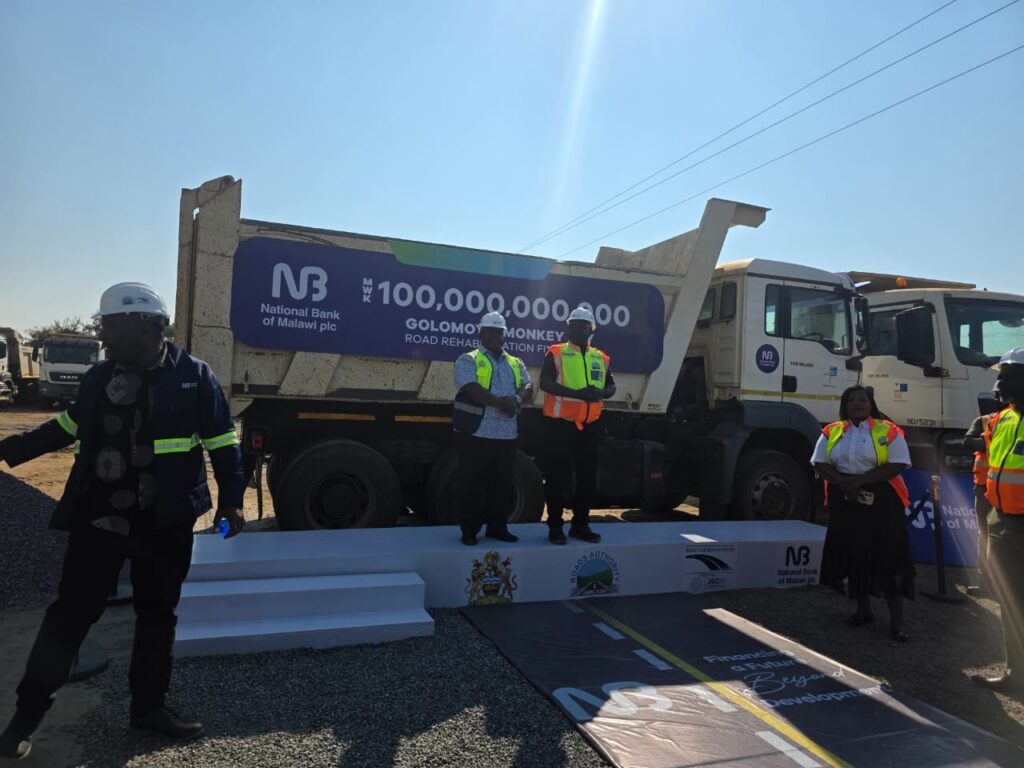
Minister of Transport and Public Works Jappie Mhango who presided over the ceremony described the financing arrangement as a significant boost to government’s efforts to improve the country’s road network.
“The financing arrangement followed discussions between National Bank and President Professor Arthur Peter Mutharika,” Mhango said, adding that government is encouraged to see local financial institutions supporting national development.
He said Malawi cannot rely solely on the national budget to finance road construction and rehabilitation.
“For any country to develop, it requires a robust road network, and that demands huge financial resources. We cannot rely on the central government budget alone. That is why we are pursuing partnerships with banks and other financial institutions to finance road infrastructure,” said Mhango.
The minister noted that years of inadequate maintenance had left many roads in poor condition and said government hopes to improve the country’s road network over the next three years through similar financing arrangements.
Meanwhile, Roads Authority Technical Advisory Committee Chairperson Newton Kambala said poor road infrastructure continues to impose significant costs on the economy by increasing vehicle maintenance expenses, delaying transport and putting pressure on the country’s foreign exchange reserves.
He said poor roads also affect access to healthcare and markets.
“In the health sector, delayed ambulance response times caused by poor road conditions have, in some cases, contributed to preventable deaths. The agriculture sector is equally affected, with farmers losing perishable produce because transport to markets takes longer than necessary,” Kambala said.
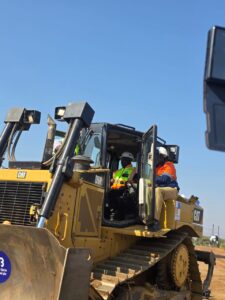
He disclosed that the contractor has already mobilised to site and that the Chantulo-Golomoti Road project will involve extensive reconstruction works designed to deliver a durable, high-quality road capable of supporting economic activity for many years.
The financed stretch is 28.4 kilometres long.