

What was meant to improve movement and boost local livelihoods is now becoming a danger zone for road users in Nsanje District. Along the Muona–Makhanga Road, overgrown thorny bushes are slowly swallowing footpaths, narrowing the roadway, and exposing pedestrians and Kabaza operators to avoidable accidents.
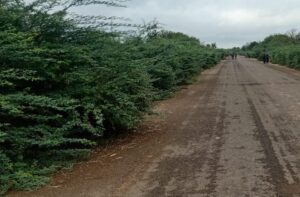
The affected stretch, from M’bwazi Engen Filling Station to Osiyana under Traditional Authority Mlolo, has gradually been overtaken by thorny vegetation locally known in the district as Jakalanda. The bushes have blocked walking paths and reduced the space available for motorists, forcing pedestrians, motorcycle taxi riders, and cyclists to compete for the same narrow strip of road.
The problem is especially worrying because the road is part of the K27 billion, 83-kilometre Thyolo–Thekerani–Muona–Makhanga project, which was completed less than four years ago. Residents say the road was expected to ease transport challenges and support economic activity, but poor maintenance is now undermining those gains.
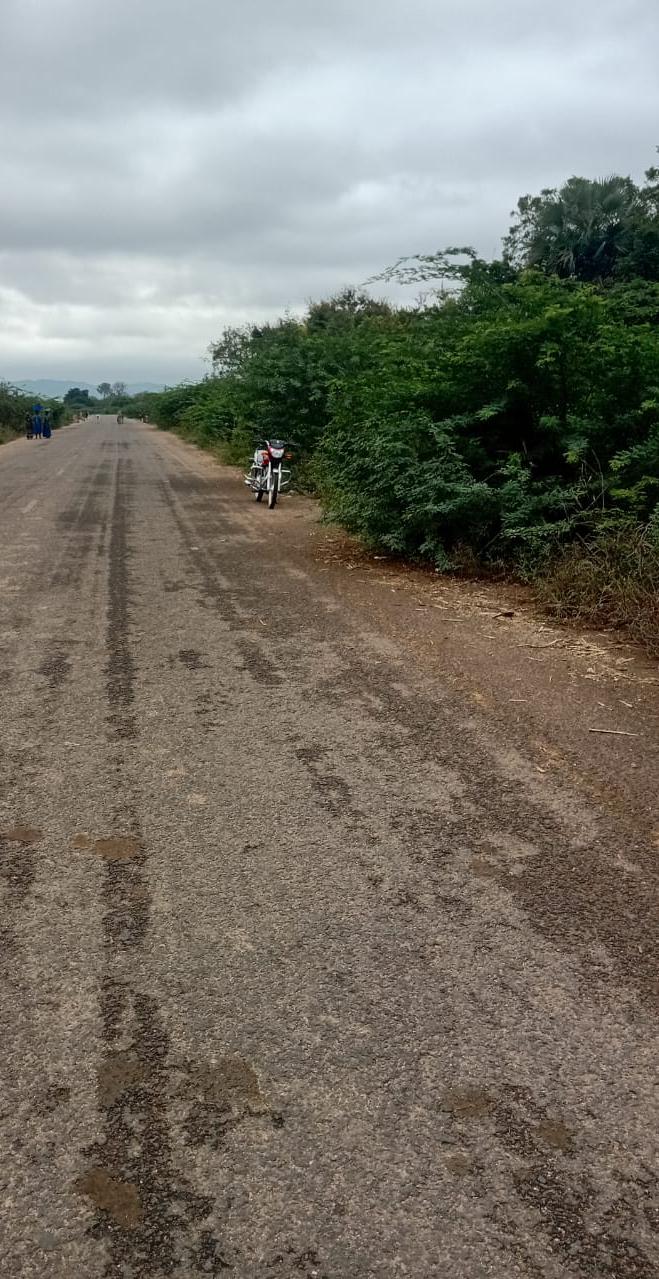
With footpaths diminishing, pedestrians have little choice but to walk on the main road. That leaves them vulnerable to moving vehicles and motorcycles, particularly in sections where the road has become too narrow for safe sharing.
Antony Hajj, a regular user of the road, said the situation has become increasingly dangerous for people on foot.
“With the increase in Kabaza operators in the area, being forced to walk on the road instead of the footpath puts pedestrians in danger,” he said.
For motorcycle and bicycle Kabaza operators, the challenge is equally severe. Riders must constantly weave around pedestrians while also avoiding vehicles coming from behind or from the opposite direction.
Chitani Useni, who has worked as a motorcycle Kabaza operator in the area for years, said the shrinking road space has made every trip riskier.
“When we try to create space for pedestrians, we risk hitting them or being hit by vehicles ourselves if we move towards the middle of the road,” he said.
The danger becomes even greater after dark. The overgrown bushes reduce visibility and make it harder for motorists, riders, and pedestrians to see one another in time to avoid collisions, Useni added.
Emmanuel Bonjesi, another frequent road user, said he has seen several accidents and near misses caused by the narrowing road space.
He described the route as a place where pedestrians dodge motorcycles, Kabaza operators squeeze through narrowing gaps, and motorists navigate with little room to spare.
Police records support these concerns.
According to Nsanje Police Public Relations Officer Jabula Ng’oma, the district recorded 13 serious road traffic accidents in the first quarter of 2026. Most of the incidents occurred along the Muona–Osiyana Road and involved pedestrians and Kabaza operators.
The road serves more than five villages and is used by thousands of residents, but local leaders say they cannot clear the bushes on their own because of the rules governing road maintenance.
Area Development Committee Chairperson Butau wa Butau said district roads are the responsibility of Nsanje District Council under the supervision of the Roads Authority.
“As a community, we cannot simply begin clearing vegetation on our own. We require guidance and authorisation from the Roads Authority through the Nsanje District Council as per the Local Government and Decentralisation Acts of 1998,” he said.
Member of Parliament for the area, Francis Folley, acknowledged the dangers and said efforts to clear the vegetation will begin once Constituency Development Fund allocations for 2026/2027 financial year are released.
“I have already engaged the District Council on the matter, and we are aware of the dangers the overgrown vegetation is posing to road users. Once the CDF funds are released, we will allocate resources towards clearing the bushes and restoring the road’s safety,” he said.
For now, the thorny bushes continue to spread while footpaths disappear. Unless action is taken soon, residents fear the road could become less of a route to opportunity and more of a corridor of preventable accidents.
By Alufisha Fischer, Contributor